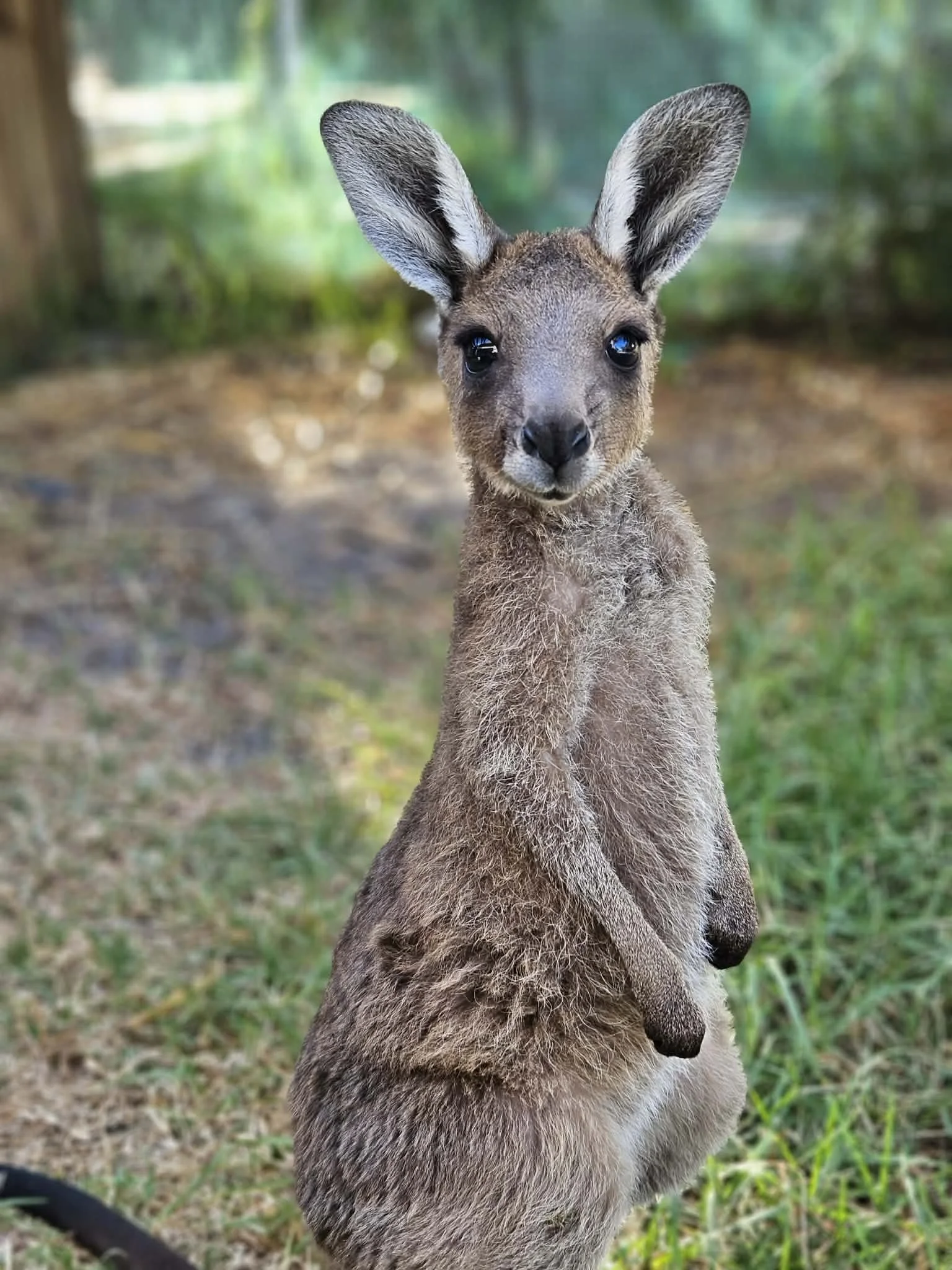
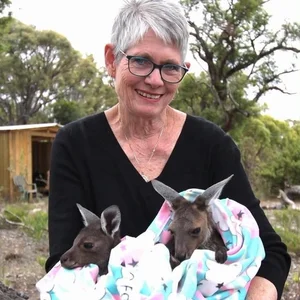
Kangaroos Are Not Feral. They Are Not Invasive. They Are Native Animals With Purpose.
In recent months, we’ve noticed an increase in people using terms like “feral” and “invasive” when talking about kangaroos. These words are being thrown around casually — and dangerously — often by people who are frustrated, misinformed, or looking for a justification to remove kangaroos from areas they have lived in for thousands of years.
At Amaris Wildlife Sanctuary, we want to set the record straight. Kangaroos are not feral. Kangaroos are not invasive. Kangaroos are native wildlife, deeply woven into the ecology, culture, and identity of this continent.
And the language we use matters.
When we label an animal as “feral” or “invasive,” we strip it of legitimacy. We make it easier to dismiss its suffering, ignore its needs, and justify its destruction. Words can either protect or endanger — and in this case, they are being used to harm.
Let’s break down what these terms actually mean.
What Is a Feral Animal?
A feral animal is a domestic species that has escaped human control and established a wild population.
Examples include:
Cats
Dogs
Horses
Pigs
Goats
These animals were introduced by humans and now live freely in the wild.
Kangaroos are not domestic animals. They did not escape from farms or households. They have lived on this land for thousands of years.
Calling kangaroos “feral” is biologically incorrect.
What Is an Invasive Species?
An invasive species is:
Introduced by humans, and
Causes harm to the environment, economy, or human health.
Examples include:
Foxes
Rabbits
Cane toads
European carp
Kangaroos do not meet either criterion. They are native, and they are part of the natural balance, not a threat to it.
Calling kangaroos “invasive” is scientifically false.
Kangaroos Are Native Animals With Purpose
Kangaroos evolved with this land. They are not visitors — they are original inhabitants.
Their ecological roles include:
Maintaining grassland health through natural grazing
Preventing bushfire fuel build‑up
Supporting soil turnover with their movement
Providing food for native predators
Shaping plant communities through selective feeding
They are not pests. They are ecosystem engineers.
Remove kangaroos, and the land suffers.
Kangaroos Have Emotions, Bonds, and Family Structures
One of the most harmful myths is that kangaroos are “dumb,” “aggressive,” or “emotionless.” Anyone who has spent time with them knows this is untrue.
Kangaroos:
Form strong family groups (mobs)
Maintain lifelong social bonds
Show affection, grief, fear, trust, and recognition
Protect their young with fierce devotion
Communicate through posture, touch, and vocalisations
Teach their joeys how to forage, navigate, and stay safe
A mother kangaroo will:
Carry her joey for up to 18 months
Continue caring for her at‑foot joey while raising another in the pouch
Return to the site of a lost joey for days
These are not the behaviours of a “feral” or “invasive” creature. These are the behaviours of a sentient, social, emotionally complex native animal.
Why Language Matters
When kangaroos are labelled as:
“feral”
“invasive”
“pests”
“nuisance animals”
it becomes easier for people to justify harming them.
Language shapes perception. Perception shapes policy. Policy shapes lives.
When we use accurate language — native wildlife, ecologically important, culturally significant — we protect them.
Kangaroos Deserve Respect, Not Erasure
Kangaroos are part of Australia’s identity. They are part of our ecosystems. They are part of our cultural heritage. They are part of our responsibility.
They are not the problem. They are not invaders. They are not feral.
They are simply trying to survive in landscapes that are shrinking, fragmented, and increasingly dominated by human activity.
At Amaris Wildlife Sanctuary, we stand for truth, compassion, and coexistence. And the truth is simple:
Kangaroos belong here. They always have. They always will.