Coexisting With Wildlife
What the Dingoes of K’gari Are Teaching Us
Across Australia, we share our landscapes with some of the most extraordinary wildlife on Earth — from sharks patrolling our coastlines to kangaroos grazing on the edges of our suburbs, to the wongari (dingoes) who have lived on K’gari for thousands of years. Yet time and again, when something goes wrong, the blame falls on the animal.
A shark bites a swimmer and the shark is killed, even though we entered its ocean. A kangaroo defends itself from an uncontrolled dog and people call for the kangaroo to be shot. A dingo reacts to human behaviour on K’gari and entire packs are culled.
These incidents are not examples of wildlife “misbehaving.” They are examples of wildlife behaving exactly as nature designed them to — and humans failing to take responsibility for our own actions in their environment.
The Dingoes of K’gari: A Mirror for the Bigger Picture
The recent events on K’gari have brought this issue into sharp focus. A tragic human death, followed by a rapid government cull, has reignited a national conversation about how we coexist with native animals.
The Butchulla people — who have cared for wongari since long before modern management plans existed — remind us that dingoes are not pests. They are cultural beings, woven into the identity of K’gari and shaped by thousands of years of living in balance with Country.
I’m not a dingo expert, and I don’t pretend to be. Most of what I know comes from research, not personal experience. But I do hold one simple belief: If an animal is native and living wild, it belongs here. And when accidents happen, they are a people problem — not a wildlife problem. Native animals should not have to suffer for our mistakes.
Why Coexistence Matters
Every conflict we see — whether it’s sharks, kangaroos, dingoes, snakes, or birds of prey — follows the same pattern:
We enter their habitat.
We change the landscape.
We bring dogs, cars, food, noise, and pressure.
And when wildlife reacts naturally, we punish the animal.
True coexistence means shifting that mindset.
It means slowing down at dusk and dawn because kangaroos move then. It means keeping dogs leashed near wildlife. It means storing food properly on K’gari so dingoes aren’t conditioned. It means respecting the ocean as shark habitat, not a swimming pool. It means listening to Traditional Owners who understand these animals better than any management plan ever could.
A Better Way Forward
Coexistence isn’t passive — it’s active. It requires:
Education
Respect
Cultural guidance
Habitat protection
Responsible behaviour
And a willingness to accept that wildlife has the right to exist without being punished for being wild
The dingoes of K’gari are not the problem. The kangaroos in our suburbs are not the problem. The sharks off our beaches are not the problem.
The problem is our expectation that wildlife should change to accommodate us, instead of us adapting to live respectfully alongside them.
In the End
If we want Australia’s wildlife to survive — truly survive — we must stop reacting with fear and start responding with understanding. We must stop blaming animals for being animals. We must stop treating native species as inconveniences. And we must start seeing coexistence not as an ideal, but as a responsibility.
Because the truth is simple: Wildlife is not the problem. How we choose to live with them is.
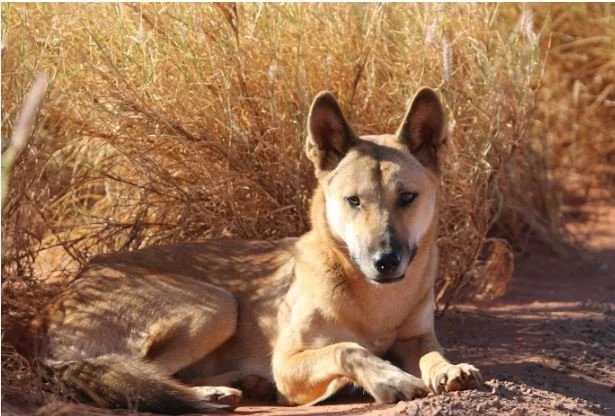
Photo from The Conversation