Bird Flu Has Arrived in Australia. What Does It Mean for Wildlife?
Over the past few weeks, we've been asked the same question over and over again:
Should we be worried about bird flu?
The answer is both simple and complicated.
Yes, we should be paying attention. Bird flu has caused devastating losses to wildlife around the world and has now reached Australia. But no, this is not a reason to panic. It is a reason to stay informed, remain vigilant and support the people working to protect our wildlife.
As carers, rescuers and wildlife lovers, understanding what is happening is one of the best things we can do.
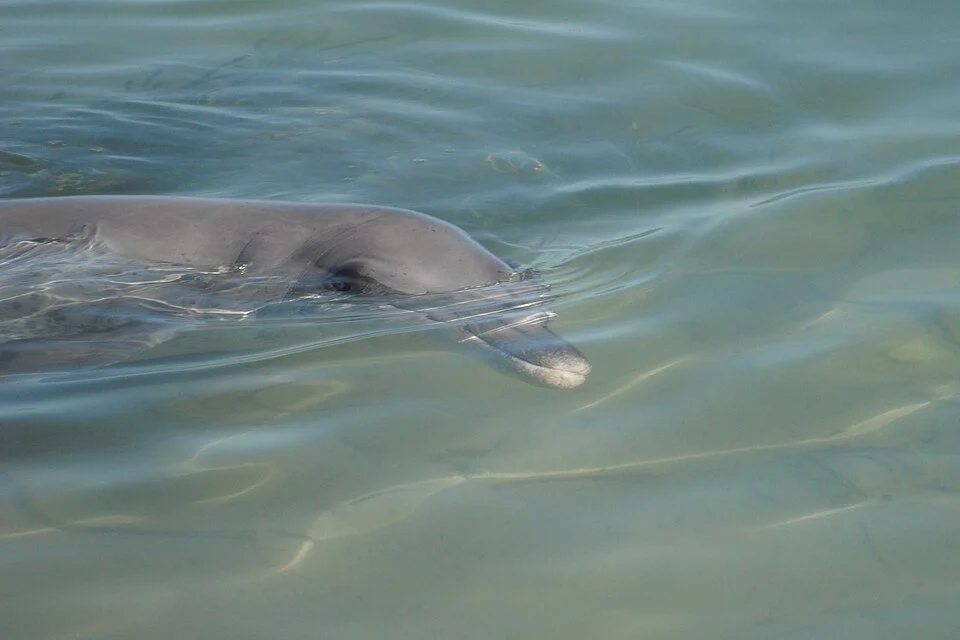
The famous dolphins of Monkey Mia are among the iconic Australian wildlife species being monitored as scientists assess the potential impacts of H5N1 bird flu
What Is Bird Flu?
Bird flu, also known as avian influenza, is a viral disease that primarily infects birds. The strain currently causing concern globally is known as H5N1, a highly pathogenic form of avian influenza.
"Highly pathogenic" means it can spread easily and cause severe illness and death in many bird species. It has spread around the world since 2021 and has affected wild birds, poultry and an increasing number of mammals. [dbca.wa.gov.au], [theguardian.com], [agriculture.gov.au]
What has surprised scientists is how many mammal species have now been infected. More than 100 mammal species have been affected worldwide, including sea lions, seals, dolphins, porpoises and cats. [theguardian.com], [wa.gov.au]
A Global Wildlife Crisis
The current H5N1 outbreak has become one of the largest wildlife disease events recorded in modern history.
Millions of wild birds have died worldwide, and the virus has been detected in more than 560 bird species. [theguardian.com]
Marine mammals have been hit particularly hard.
In South America, an estimated 30,000 sea lions died during outbreaks linked to H5N1. [thestar.com.my]
Southern elephant seal colonies have suffered devastating losses, and more than 13,000 southern elephant seal pups are believed to have died on Australia's Heard Island during an outbreak associated with the virus. [thestar.com.my], [theguardian.com]
Scientists believe the actual death toll is significantly higher because many affected animals die in remote locations where they are never recorded.
Has Bird Flu Infected People?
Yes.
Although H5N1 is primarily a disease of animals, humans can become infected.
According to the CDC, more than 1,000 human cases have been reported globally since 1997. [cdc.gov]
World Health Organization figures show 466 deaths among 964 laboratory-confirmed cases reported between 2003 and early 2025. [cdn.who.int]
Most human infections have occurred following close contact with infected birds or other infected animals. Recent investigations have not found evidence of sustained person-to-person transmission, and health authorities continue to assess the risk to the general public as low. [cdc.gov], [cdc.gov], [cdc.gov]
It's No Longer Just a Bird Disease
One of the most surprising developments in the global H5N1 outbreak has been the virus's ability to infect an increasing range of mammals.
Around the world, H5N1 has been detected not only in wild birds and marine mammals but also in domestic animals. Perhaps the most significant development has been the outbreak in dairy cattle in the United States. The virus has spread through dairy herds, demonstrating that H5N1 is capable of crossing species barriers and infecting large mammal populations. [cdc.gov]
Affected cattle have generally shown signs such as reduced milk production, abnormal thickened milk, reduced appetite, lethargy, fever and dehydration. In some cases, human infections have been linked to exposure to infected dairy cattle. [cdc.gov]
For scientists, the emergence of H5N1 in cattle is particularly concerning because it demonstrates the virus's ability to adapt to mammals. The more opportunities a virus has to infect different species, the more closely researchers watch for changes that could affect animal and public health.
What about sheep?
At present, sheep have not featured prominently in reported H5N1 outbreaks, and the major international reports currently focus on infections in wild birds, poultry, dairy cattle, marine mammals, cats and other wildlife species. Scientists continue to monitor all livestock species as the situation evolves. [phys.org]
For many wildlife carers, the outbreak in dairy cattle was a turning point. It reinforced the fact that H5N1 is no longer simply a disease of birds. It is now a disease that has shown an ability to move between multiple species, making ongoing monitoring and biosecurity more important than ever.
Bird Flu Has Reached Australia
For many years Australia was the last continent free of the current H5N1 strain.
That changed in June 2026 when H5N1 was confirmed in a migratory brown skua in Western Australia. [dbca.wa.gov.au], [theguardian.com]
As of 5 August 2026, Australia had recorded 101 confirmed detections of H5 bird flu in wild seabirds:
At the time of writing, there have been no detections in Australia's poultry industries, and authorities advise that the risk to human health remains low. [agriculture.gov.au]
Which Australian Animals Are Most At Risk?
Experts are particularly concerned about species that live or breed in dense colonies, where disease can spread rapidly.
These include:
Terns
Gulls
Albatrosses
Penguins
Sea lions
Fur seals
Overseas outbreaks have shown these animals can suffer significant losses when H5N1 becomes established in a population. [theconversation.com], [phys.org]
The Government's Wildlife "Doom Sheet"
One of the more alarming developments in recent weeks has been the release of a Federal Government assessment examining how vulnerable Australian wildlife might be to H5N1.
The assessment ranked more than 2,000 Australian bird and mammal species according to their susceptibility and vulnerability to the disease. Conservation groups have nicknamed it a"doom sheet" because of the large number of species identified as being at risk. [abc.net.au]
This does not mean these species are infected.
Rather, it identifies species that could experience severe impacts if H5N1 becomes widespread in Australia. [abc.net.au]
Species highlighted as being among the most vulnerable include:
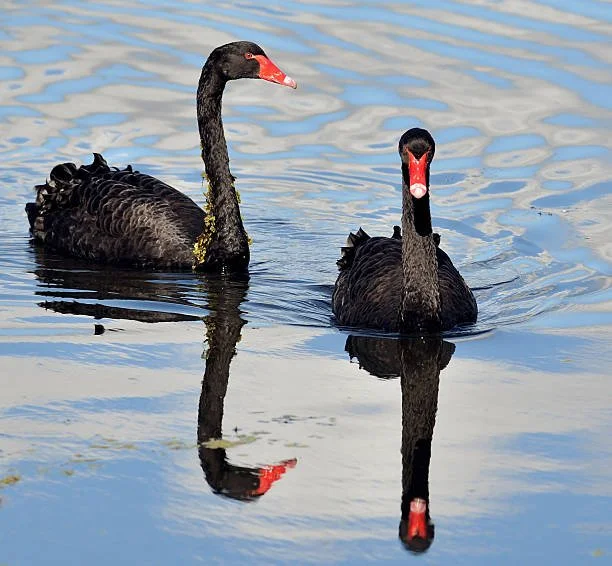
A black swan on calm waters in Australia. Species like these remind us that bird flu is no longer just a concern for seabirds, but a growing wildlife conservation issue that deserves our attention.
Herald petrel
Christmas Island frigatebird
Imperial shags on Heard and Macquarie Islands
Tasmanian devil
Eastern quoll
Australian sea lions
Fur seals
Elephant seals
Several dolphin species
Black swans
Pelicans
Ibis
Most Australian penguin species
Cassowaries [abc.net.au], [thewest.com.au]
The mention of iconic animals such as black swans, Tasmanian devils and the famous dolphins of Monkey Mia highlights just how broad the concern has become. [thewest.com.au]
Conservation groups have noted that nearly one in five Australian bird and mammal species fall into high, very high or extreme risk categories should H5N1 become widespread.
What About Kangaroos, Koalas and Wombats?
Naturally, this is the question we get asked most often at Amaris Wildlife Sanctuary.
The encouraging news is that kangaroos, koalas and wombats have not been identified among the highest-risk species in the publicly reported summaries of the Federal Government's assessment. [abc.net.au]
However, scientists are remaining cautious.
H5N1 has already infected a remarkable range of mammals overseas. Because of this, researchers cannot completely rule out the possibility that Australian marsupials could become infected should they be exposed to the virus. [theguardian.com], [phys.org]
At present, there is no evidence of widespread infection in kangaroos, koalas or wombats in Australia. [dbca.wa.gov.au], [agriculture.gov.au]
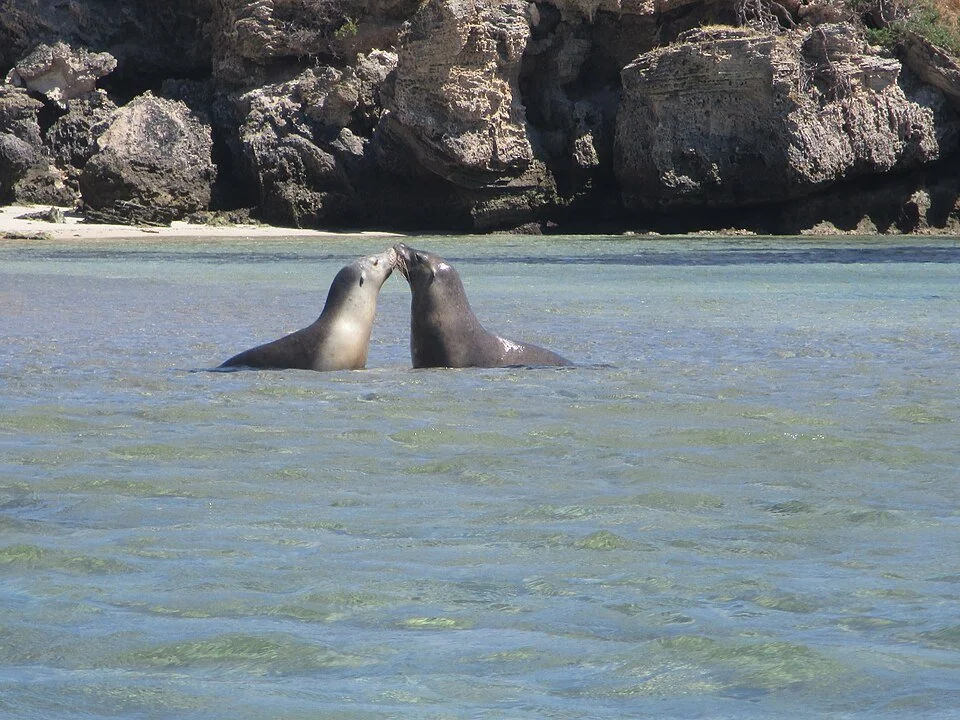
The Australian sea lion is one of our most iconic marine mammals. Overseas outbreaks of H5N1 have devastated sea lion populations, highlighting the importance of protecting Australia's wildlife as the virus spreads across the continent.
Calistemon, CC BY-SA 4.0 <https://creativecommons.org/licenses/by-sa/4.0>, via Wikimedia Commons
Can Animals Recover From Bird Flu?
One of the most heartbreaking aspects of H5N1 is that in some species it can be extremely severe.
However, bird flu is not always fatal.
Some birds and mammals have recovered from infection. Recovery depends on the species, the severity of infection and how early supportive care can be provided.
Unfortunately, there is no simple cure for wildlife affected by H5N1. Treatment generally focuses on supportive care, including hydration, warmth, nutrition and treatment of secondary infections. Even with intensive care, severely affected animals often have a poor prognosis. [phys.org], [theconversation.com]
Why Are Some Vet Clinics No Longer Accepting Birds?
This is a difficult issue that many wildlife rescuers are beginning to encounter.
As concerns about bird flu grow, some veterinary clinics and wildlife hospitals are reviewing their biosecurity measures and limiting bird admissions.
At first glance this can seem shocking. After all, an injured bird still needs help.
But the reality is more complicated.
Veterinary clinics have a responsibility to protect every patient in their care. An injured bird arriving at a clinic may have suffered trauma, but staff must also consider whether that bird could be carrying an infectious disease.
Many clinics do not have specialised isolation facilities that allow them to safely assess wild birds without risking exposure to other wildlife patients, domestic pets and veterinary staff.
Recently, local wildlife carers reported cases two cockatoos injured in a deliberate motor vehicle strike were unable to gain admission to care facilities. ( Cornerstone Vet Clinic did take them in and they were attended to). While we cannot comment on the specifics of those cases, they highlight the difficult decisions wildlife professionals are now facing.
The decision to refuse admission is rarely about a lack of compassion.
Instead, it is often about preventing a potentially much larger disease event that could affect dozens of other animals already in care.
For wildlife carers, every rescue now comes with additional questions:
Is the animal injured, sick, or both?
Could it be carrying H5N1?
Where can it be safely assessed?
How do we protect every other animal already receiving care?
These are difficult questions, and unfortunately there are no easy answers.
What Can We Do?
For most of us, the answer is simple.
If you encounter sick or dead birds or notice unusual wildlife deaths:
Do not touch the animal.
Keep pets away.
Record the location.
Contact the appropriate wildlife or biosecurity authorities. [wa.gov.au], [agriculture.gov.au]
Every report helps scientists and wildlife health professionals better understand how the disease is moving through the environment.
A Final Thought
Here at Amaris Wildlife Sanctuary, we're watching this situation with a mixture of concern, curiosity and hope.
Concern, because we've seen the devastation H5N1 has caused to wildlife populations around the world.
Curiosity, because Australia's unique animals may respond differently, and we are still learning how the virus behaves in our ecosystems.
And hope, because dedicated wildlife carers, veterinarians, researchers and conservation organisations have been preparing for this possibility for years.
For now, our kangaroos are still grazing peacefully, our wombats are still busy redesigning their burrows, and nature continues much as it always has.
But bird flu is a reminder that wildlife conservation isn't only about rescuing individual animals. Sometimes it's about recognising emerging threats, supporting science, and working together to protect the species we love before a crisis becomes a catastrophe.
At Amaris, we'll continue following the science, sharing updates and doing everything we can to help keep Australia's wildlife safe.